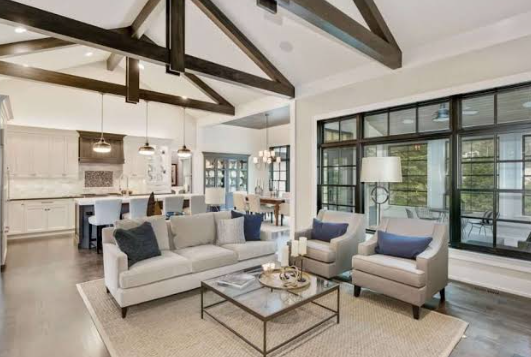
The discussion centers on practical upgrades recommended by a home improvement center. Lighting is staged in layers—ambient, task, and accent—to shape mood while trimming energy use. Storage ideas favor reconfigurability with small shelves, hidden bins, and magnetic organizers. Wall finishes mix bold texture with playful borders to add personality without clutter. Budget-minded tweaks and smart switches offer balanced function and atmosphere, inviting residents to tailor brightness and color by activity, while keeping harmony across spaces.
Update Lighting for Instant Ambiance and Efficiency
Smart lighting can transform mood and energy use with minimal effort.
In contemporary spaces, lighting layers enable precise atmosphere control, balancing ambient, task, and accent needs.
Energy aware bulbs reduce consumption without sacrificing performance, supporting flexible routines.
This approach emphasizes autonomy, enabling residents to tailor brightness and color to activities, times, and preferences, while maintaining consistent efficiency across rooms and moments.
Clever Storage Makeovers That Spark Joy
Tiny shelves maximize vertical space; hidden bins conceal seasonal items; magnetic organizers keep frequently used tools within reach.
Pegboard hacks customize layouts, elevating functionality while preserving aesthetics and freedom to reconfigure as needs evolve.
Playful Wall Treatments and Finishes for Personality
Playful wall treatments and finishes inject personality into rooms without sacrificing cohesion. Designers explore bold textures, murals, and tactile paints to express individuality while maintaining balance with existing palettes.
Strategic accents—chalkboard borders, pebbled plaster, or gloss contrasts—create drama without overwhelm. The result is a curated, energetic atmosphere, where personality finishes invite expression yet preserve timeless room harmony.
Smart Budget Tweaks That Save Without Sacrificing Style
Budget-savvy upgrades provide high impact without high cost, guiding homeowners to prioritize changes that enhance function and aesthetics in tandem.
Smart budget tweaks emphasize practicality and restraint, delivering noticeable gains without excess.
Budget brushes refresh surfaces with minimal disruption while preserving texture.
Smart switches streamline lighting, reduce energy use, and support automation, aligning affordability with freedom to customize ambiance and daily routines.
Frequently Asked Questions
How Do I Choose Lighting Color Temperature for Rooms?
The answer: For rooms, one should match lighting temperature to tasks and mood, selecting warmer temps for relaxing spaces and cooler temps for work areas. This influences color perception and accuracy, balancing ambience with practical clarity and freedom of choice.
Which Storage Upgrade Offers the Best ROI Long-Term?
A storage upgrade offering the best ROI long-term emphasizes modular systems and durable finishes. Storage ROI hinges on maximizing space and accessibility; long term value rises when finish compatibility with existing décor is preserved while scalability remains possible.
Can Wall Treatments Damage or Peel Over Time?
An image of peeling wallpaper warns that wall treatments durability can waver; yes, finish longevity, material aging, and wall durability interact with humidity and substrate. Proper preparation, ventilation, and quality materials protect wall treatments durability over time.
What Dimmer Options Work With LED Lights Reliably?
Dimmer compatibility with LED lights varies; choose dimmers labeled “LED-compatible” or “dimmable LED.” Many standard dimmers work with certain LED modules, but reliable performance hinges on LED compatibility. For freedom-minded homeowners, prioritize proven LED compatibility.
How Do I Prevent Color Clashes With New Finishes?
Like a well-tuned orchestra, color harmony emerges when new finishes are tested together. The approach stresses finish coordination, balanced contrasts, and subtle undertones to prevent clashes, guiding freedom-loving homeowners toward cohesive, confident design decisions.
See also: Applications of Neuromorphic Technology
Conclusion
In sum, these upgrades illustrate how thoughtful layering—lighting, storage, wall treatments, and smart budgeting—transforms a house into a cohesive, customizable home. Each choice supports atmosphere, function, and efficiency without sacrificing personality. By coordinating ambient, task, and accent elements, residents can tune brightness and texture to suit activity and mood, maintaining harmony across spaces. Is true comfort achieved only when every detail serves both beauty and practicality, or when the home actively reflects our evolving rhythms?
