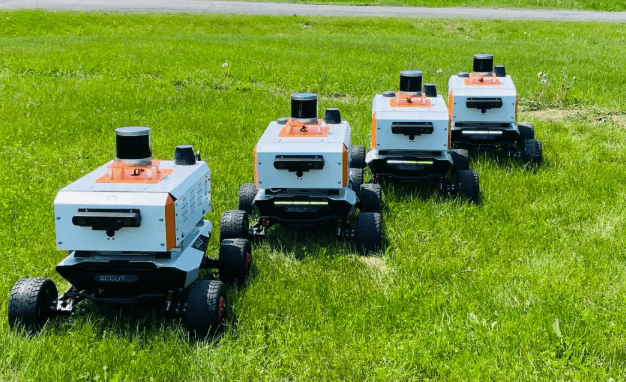
Swarm robotics offers scalable, decentralized coordination for complex tasks across domains. The approach emphasizes robustness, energy efficiency, and interoperable communication, enabling rapid debris assessment in disasters and precise crop monitoring in agriculture. Domain-graded strategies and ethics governance guide safe experimentation and deployment. Performance hinges on reliable sensing, sensor fusion, and resilient control under variability. The potential is tempered by limits in reliability and standardization, inviting focused evaluation of methods and metrics as new applications emerge.
What Swarm Robotics Can Do for Real-World Tasks
Swarm robotics offers a versatile framework for tackling real-world tasks by leveraging the collective behavior of simple agents to achieve complex objectives. The study emphasizes emergent coordination through local rules, promoting robust, scalable systems. Experimental analyses compare architectures for resilience and adaptability, while interdisciplinary methods link control theory with ecology-inspired strategies. Energy efficiency emerges as a critical design criterion guiding optimization and deployment decisions.
Applications by Domain: From Disaster Response to Agriculture
Across diverse domains, swarm robotics demonstrates how coordinated, low-level agents can yield high-level capabilities tailored to domain-specific needs, from rapid debris assessment in disaster zones to precise crop monitoring in agriculture.
This domain-graded lens analyzes map based exploration strategies, sensor fusion, and coordination, while acknowledging ethical considerations and governance, enabling rigorous experimentation to balance safety, efficiency, and freedom for exploratory, field-scale deployments.
How to Evaluate Swarm Solutions for Projects
Evaluating swarm solutions for projects requires a structured framework that translates domain-specific goals into measurable performance indicators.
The assessment emphasizes repeatable experiments, robust metrics, and comparative studies across configurations.
It examines swarm coordination and decision dynamics, resilience to disturbances, and scalability.
Communication protocols are evaluated for reliability and latency, ensuring interoperability among heterogeneous agents while maintaining transparent, disciplined reporting and interdisciplinary interpretability.
Benefits, Limits, and Future-Ready Considerations
The benefits, limits, and future-ready considerations of swarm robotics emerge from a nuanced balance between collective capability and practical constraints, requiring an analytical lens that integrates engineering, ecology-inspired models, and human–machine collaboration.
This assessment emphasizes miniature autonomy and collective decision making, highlighting scalable coordination, robustness under uncertainty, ethical implications, and design tradeoffs guiding iterative experimentation and interdisciplinary validation for adaptable, freedom-oriented applications.
Frequently Asked Questions
How Do Swarm Robots Handle Ethical Considerations in Deployment?
Ethical governance and consent frameworks guide deployment, as swarm robots incorporate multidisciplinary assessments of risk, transparency, and accountability. The approach analyzes societal impact, experiments with governance models, and honors autonomy while balancing safety, privacy, and collective freedom.
What Are the Cost Drivers for Large-Scale Swarm Deployments?
Cost drivers and deployment scale dominate, with parallelism shaping cost curves: hardware, communication, computation, energy, maintenance, and deployment logistics. The analysis adopts rigorous, experimental, interdisciplinary methods for scalable, freedom-seeking institutions optimizing resource allocation and risk.
How Is Data Privacy Managed in Swarm Fleets?
Data privacy is managed through layered data governance and ethical guidelines, balancing transparency with operational secrecy; swarm ethics informs protocol design, ensuring consent-aware data collection, auditability, and risk assessment within interdisciplinary, experimental frameworks that respect user autonomy and freedom.
Can Swarms Operate in Underwater or Subterranean Environments?
Underwater exploration and subterranean communication are feasible for swarms, though challenged by pressure, turbidity, and signal attenuation. The analysis emphasizes experimental rigor, interdisciplinary modeling, and autonomous adaptation, supporting a freedom-oriented stance toward resilient, cooperative robotic ecosystems.
See also: Challenges Facing Stablecoin Projects
What Maintenance Schedules Keep Swarms Reliable Long-Term?
Maintenance cadence balances redundancy and wear, enabling long-term reliability; fault tolerance design emphasizes graceful degradation. The analysis unfolds with analytical rigor, experimental focus, and interdisciplinary insight, presenting a satirical opening while articulating schedules for autonomous swarms seeking freedom.
Conclusion
Swarm robotics promises seismic shifts in capability, with fleets of agents cascading collaboration across domains from disaster triage to precise agriculture. When rigorously tested, these systems reveal emergent intelligence, fault tolerance, and energy-smart coordination that outstrip single-robot strategies—like clouds orchestrating weather in real time. Yet this grand vision rests on disciplined experiments, interoperable protocols, and ethical governance. If pursued with interdisciplinary rigor, swarm systems could redefine resilience, scalability, and responsibility in complex, real-world tasks.
